Mold After Water Damage: Why Marietta, GA Homes Are at Risk
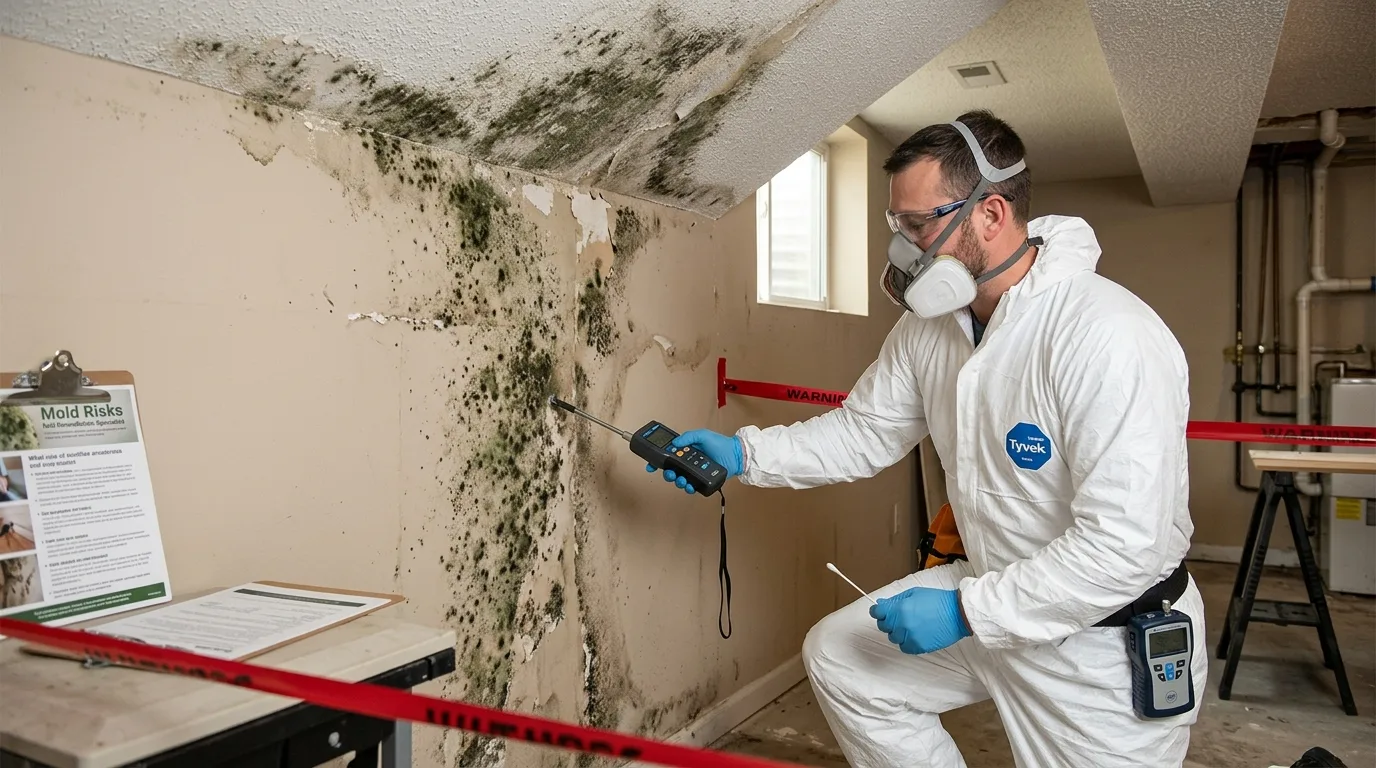
If you had water damage in your Marietta home last summer and didn’t use professional structural drying equipment — only fans and a consumer dehumidifier — there’s a meaningful probability that mold is growing inside your walls right now. Marietta’s humid subtropical climate creates conditions that are uniquely challenging for water damage outcomes: the 24–48 hour window between water intrusion and mold colonization that applies anywhere is compressed by high ambient humidity into a practical reality, not just a theoretical risk. In this post, we explain exactly why mold is a more serious concern in Marietta than in many other markets, and what it takes to actually prevent it.
In this post, we cover the mold growth timeline in Marietta’s climate, the specific conditions that accelerate mold after water damage, why partial measures fail, and what complete prevention requires.
Recent Water Damage in Your Marietta Home?
If you didn't use professional drying equipment, there may be hidden mold. Call (877) 698-1311 for a free assessment across Cobb County.
Why Marietta’s Climate Compresses the Mold Risk Window
Mold requires three things to grow: a food source (organic building materials — wood, drywall paper, insulation), the right temperature (68–86°F is optimal), and moisture above a threshold level (typically 60–70% relative humidity or moisture content in wood above 19%). In most water damage scenarios, the limiting factor that can be controlled is moisture — and that’s exactly what professional structural drying equipment is designed to control.
The problem in Marietta is that from May through September, outdoor relative humidity consistently exceeds 80%. This matters because the air inside a home after a water event is not isolated from outdoor air — ventilation, HVAC systems, and building envelope gaps all allow outdoor air to influence indoor humidity. In a dry climate, opening windows after a water event helps dry the space out. In Marietta’s summer, opening windows introduces humid air that maintains wet materials at or above the mold threshold even as liquid water is removed.
A homeowner in Marietta who runs fans and consumer dehumidifiers after a flooding event during July is fighting outdoor conditions as well as indoor moisture. The result is materials that appear dry on the surface but maintain moisture content in the 20–25% range inside wood assemblies — high enough to sustain mold growth, but not high enough to produce visible surface moisture. This is why mold appears “out of nowhere” in Marietta homes weeks after a water event: it was growing in the wall cavity the entire time, finally producing visible surface growth when the colony reached sufficient size.
The Specific Mold Risk in East Cobb and West Cobb Neighborhoods
The Chestnut Creek and East Cobb neighborhoods sit in heavily wooded terrain where shade further reduces natural drying capacity after rain events. A structure in an open, south-facing lot that receives direct sun can dry significantly faster than an identical structure under a tree canopy in the same rain event. East Cobb’s dense mature tree coverage means that soil stays wet longer, ambient outdoor humidity near the home stays elevated longer, and structural materials retain moisture longer than they would in less-shaded settings.
West Cobb neighborhoods with brick-veneer traditional homes face a related issue: brick veneer is an excellent rain-screen surface but a poor drying surface. Water that infiltrates behind brick veneer through compromised mortar joints or flashing failures is effectively trapped between the veneer and the sheathing — a dark, poorly ventilated space that maintains elevated humidity for extended periods. This is a mold risk specific to the traditional brick construction that characterizes many West Cobb homes.
Why Professional Structural Drying is Not Optional in Marietta
Industrial dehumidifiers used in professional water damage restoration are categorically different from consumer equipment. A professional LGR (Low-Grain Refrigerant) dehumidifier removes 30–50 gallons of water per day from the air and building materials. The consumer dehumidifier most homeowners own removes 10–15 pints per day. The difference is not just capacity — industrial equipment is designed to achieve low moisture targets in building assemblies, not just to make the air feel dryer.
Commercial air movers work in concert with dehumidifiers to accelerate evaporation from building materials — the air mover pushes air across wet surfaces, evaporating moisture, which the dehumidifier then removes from the air. A typical Marietta restoration job uses 8–12 air movers and 2–4 industrial dehumidifiers running simultaneously. This combination achieves structural drying that consumer equipment cannot replicate.
The dehumidification services cost that appears in water damage restoration estimates is not optional overhead — it is the core of what prevents mold in Marietta’s climate. Water damage cleanup without adequate structural drying in Georgia is not complete restoration; it’s cleanup with a delayed mold problem.
Mold Growing in Your Marietta Home After Water Damage?
Our IICRC-certified team handles both the mold and the underlying moisture. Call (877) 698-1311 — serving East Cobb, West Cobb, Historic Marietta, and all of Cobb County.
Types of Mold Found After Water Damage in Marietta Homes
Cladosporium is the most common mold found in Georgia homes after water damage — it grows on painted surfaces, wood, carpet, and HVAC surfaces. It typically appears as dark green or black spots on surfaces and is associated with musty odors.
Penicillium/Aspergillus species grow on water-damaged building materials and are common in crawl spaces and wall cavities where humidity stays elevated. Some species produce mycotoxins that are significant health concerns.
Stachybotrys chartarum (black mold) grows specifically on cellulose-containing materials — drywall paper, wood framing — that remain wet for extended periods. This species is slower-growing than common molds but requires the highest level of remediation due to potential health effects.
None of these require professional identification at the remediation stage — any visible mold colony in a home warrants professional mold remediation using IICRC AMRT protocols, regardless of species.
What Complete Mold Prevention After Water Damage Requires
Complete mold prevention requires three things done in sequence: thorough extraction of all standing and liquid water, professional structural drying to bring all building assembly components to IICRC target moisture levels, and post-drying moisture verification to confirm targets were achieved. This process typically takes 3–7 days in Marietta’s summer climate — longer if the event was large or ambient conditions are particularly challenging.
Any deviation from this sequence — starting drying without complete extraction, ending drying before target moisture levels are reached, or skipping moisture verification — leaves the door open for mold. Mold remediation added after the fact adds $500–$6,000 or more to a project that was nearly complete. The additional cost of doing structural drying correctly from the start is always less than the cost of remediating the mold that incomplete drying produces.
Frequently Asked Questions
How quickly can mold start growing after water damage in Marietta?
Under Marietta’s summer humidity conditions, mold can begin colonizing organic building materials within 24–48 hours of water intrusion. In low-humidity winter conditions, this window extends — but professional drying is still required because even winter conditions inside a heated home can sustain mold growth in wet materials.
What does mold inside a wall look like before it’s visible on the surface?
You can’t see it — which is why musty odors and professional moisture mapping are the detection tools rather than visual inspection alone. See our guide on 5 signs of water damage in your Marietta home.
Can I prevent mold myself after water damage in Marietta?
You can take immediate steps — extract standing water with a shop vac, remove wet materials, open interior doors to improve air circulation — but these measures are insufficient for structural drying in Marietta’s climate. Professional equipment is required to achieve the moisture levels that prevent mold in Georgia’s humid environment.
Protect Your Marietta Home From Mold After Water Damage
Call (877) 698-1311 for immediate professional drying and mold prevention — serving Marietta, Kennesaw, Smyrna, Roswell, and all of Cobb County.
Related: