5 Signs of Water Damage in Your Marietta, GA Home
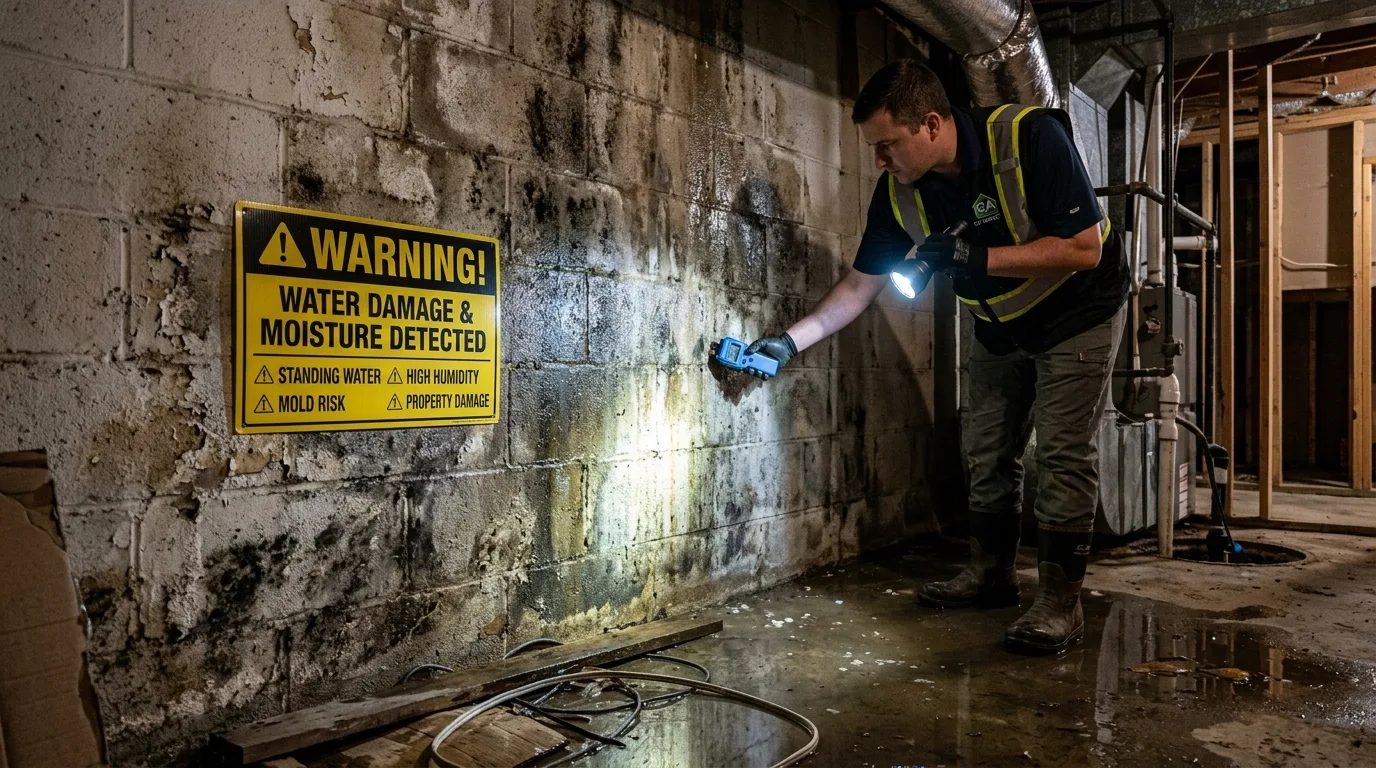
Have you noticed a faint musty smell in your basement but no visible water? Are there faint brown rings on your ceiling that appeared after last month’s thunderstorm? In Marietta, Georgia, these aren’t minor annoyances — they’re your home sending an early warning that water damage is already underway. In this post, we cover the 5 most important warning signs Marietta homeowners should recognize, what each sign means, and what to do before the damage compounds.
In this post, we cover the 5 signs, why each is especially significant in Marietta’s climate, what’s happening inside your walls when you see them, and the steps to take immediately.
Concerned About Water Damage in Your Marietta Home?
Don't wait for the mold to appear. Call (877) 698-1311 for a free water damage assessment anywhere in Cobb County.
Why Early Detection Matters More in Marietta
What makes Marietta different from many other markets is the speed at which a minor moisture problem becomes a major one. The city’s humid subtropical climate — with outdoor humidity above 80% from May through September — means building materials that are damp don’t dry naturally between rain events. The way they would in a drier climate. In the Chimney Springs and East Cobb neighborhoods, where wooded lots provide shade that further slows natural drying, moisture trapped in walls and subfloors can sustain active mold growth for weeks without producing the dramatic visual signs many homeowners expect.
Catching water damage at the sign stage — before it progresses to structural damage and active mold colonies — is the difference between a $1,500 remediation and a $15,000 restoration. The five signs below represent the most reliable early indicators that water damage is occurring or has occurred in your home.
Sign 1: Stains or Discoloration on Ceilings and Walls
The most visible sign of water damage in Marietta homes is yellow, brown, or orange staining on ceilings and walls. These stains form when water migrates through building materials and deposits minerals and organic compounds on painted surfaces. The stain is the watermark left behind after the water evaporated — but the pathway it took is still open, and the materials above or behind the stain are likely still retaining moisture above normal levels.
In Historic Marietta homes near Marietta Square with older roofing systems, ceiling stains often indicate roof leak pathways that have been active through multiple rain seasons. The stain you see on the ceiling may represent months of intermittent water intrusion rather than a single event. A stain that feels soft or spongy when pressed indicates active moisture retention — the damage is ongoing, not historical.
What to do: Mark the boundary of any stain with a pencil. If it grows after the next rain, you have an active pathway. Call for an assessment — moisture meters will confirm whether the staining material is still retaining above-normal moisture levels. Read our guide on water damage restoration for Marietta’s historic homes for context on older properties.
Sign 2: Musty Odors Without Visible Moisture
A musty, earthy smell without obvious standing water or visible staining is one of the most important early warning signs in Marietta’s climate — and one of the most commonly dismissed. The odor comes from microbial volatile organic compounds (MVOCs) produced by mold colonies, often growing inside wall cavities, beneath flooring, or in crawl spaces where they’re not visible from the living area.
Cobb County homes with clay soil driveways and unencapsulated crawl spaces produce this odor more frequently than homes in other markets because the crawl space is a chronic moisture source. Soil moisture vapor continuously rises through the crawl space floor, maintaining humidity levels in the 80–95% range that supports mold growth year-round, even without a specific water event.
What to do: Track where the odor is strongest. If it intensifies near floor vents, the crawl space is the likely source. If it’s strongest in specific rooms, the source is likely inside the wall or ceiling assembly adjacent to those rooms. Professional moisture mapping is required to locate and quantify the source — the smell alone doesn’t tell you where the moisture is. See our crawl space water damage service for Marietta-specific solutions.
Sign 3: Peeling Paint, Bubbling Wallpaper, or Warped Surfaces
Paint that is bubbling, peeling, or blistering — especially on walls below windows or above baseboards — indicates moisture vapor pushing through the wall assembly from the inside. This is a structural drying problem: moisture inside the wall cavity is trying to escape through the surface. In West Cobb homes with older wall assemblies, this sign frequently appears in bathrooms, laundry rooms, and exterior walls facing the direction of prevailing storm winds.
Warped wood trim, swollen door frames that no longer close properly, and buckled hardwood floors are related signs. Wood absorbs moisture and expands — a door that suddenly sticks in the frame is often the first indication that the wall assembly around it is retaining elevated moisture. In the Indian Hills neighborhood, where homes with older wood trim are common, this sign deserves immediate investigation rather than painting over.
What to do: Don’t paint over bubbling paint or attempt to fix a sticking door as the primary response. These are symptoms, not the problem. Moisture readings behind the affected surfaces will determine whether active drying is required. Emergency water extraction followed by structural drying is the correct sequence if moisture is confirmed above threshold levels.
Seeing Signs of Water Damage in Your Marietta Home?
Get a free professional assessment before the problem compounds. Serving Marietta, Kennesaw, Smyrna, and all of Cobb County.
Sign 4: Unexplained Increases in Water Bills or Humidity
A water bill that increases by 15–20% without a corresponding change in usage is a reliable indicator of a hidden leak. A slow drip from a pinhole in a supply line inside a wall may not produce any visible sign for months — the water is absorbed directly into insulation, wall framing, and subfloor. By the time visible staining or warping appears, the affected assembly has been wet long enough for structural damage to occur.
Similarly, an unexplained rise in indoor humidity — particularly if your HVAC system hasn’t changed — can indicate moisture intrusion at a level your system cannot overcome. During Marietta’s hot, humid summers, homes with active crawl space moisture or wall cavity leaks may run HVAC systems far longer than expected, as the unit continuously removes moisture that is continuously being introduced by the hidden leak. If your cooling costs have increased without explanation in August, consider a moisture investigation before assuming HVAC inefficiency.
What to do: Pull water bills for the last 12 months and look for an upward trend without explanation. A sudden spike followed by stable billing may indicate an acute event (burst pipe) that self-resolved to a slow drip. A gradual climb over several months suggests a slow, chronic leak. Both warrant professional moisture assessment.
Sign 5: Visible Mold Growth
If you see visible mold, the water damage that caused it has been present long enough for the mold colonization cycle to complete — typically 24–48 hours at Marietta’s summer humidity levels. Mold appearing on walls, ceilings, or grout is a secondary indicator, not the primary one, because it means the moisture source has been active for at least a day or two.
The mold you can see is often a fraction of the colony. For every square foot of visible mold on a painted surface, there is typically more growing on the back face of that drywall, within the wall cavity, and potentially on wood framing. Painting over visible mold with mold-resistant paint does not address the colony — it conceals it while the mold continues growing on the hidden faces.
What to do: Do not disturb visible mold by cleaning it with bleach or wiping surfaces. Disturbing mold releases spores into the air, potentially spreading the colony to unaffected areas. Call for professional mold remediation assessment. Read our guide on why Marietta homes face elevated mold risk after water damage for more context on the mold lifecycle in Georgia’s climate.
Frequently Asked Questions
How do I know if my Marietta home has hidden water damage?
Moisture meters and thermal imaging cameras are the professional tools used to detect hidden moisture in Cobb County homes. Consumer moisture meters are available but require careful interpretation. If you see any of the five signs above, professional assessment is warranted rather than a DIY check.
Can I fix water damage myself in Marietta?
Small surface repairs — patching a small stain after a leak is definitively fixed — are DIY-appropriate. Active moisture problems require professional structural drying equipment to resolve correctly, particularly in Marietta’s humid climate. Consumer equipment does not achieve the moisture removal rates required to prevent mold in Georgia’s summer conditions.
How much does it cost to address water damage signs in Marietta?
Early-stage water damage caught at the sign stage typically costs $1,000–$2,500 to remediate. Waiting until mold is visible, structural damage has occurred, or multiple assemblies are affected increases costs significantly. See our complete Marietta water damage cost guide for detailed pricing.
Don't Wait for Mold to Make the Call
If you're seeing any of these signs in your Marietta home, call (877) 698-1311 for a free assessment. Serving East Cobb, West Cobb, Historic Marietta, and all of Cobb County.
Related: