Crawl Space Water Damage in Marietta, GA: The Red Clay Connection
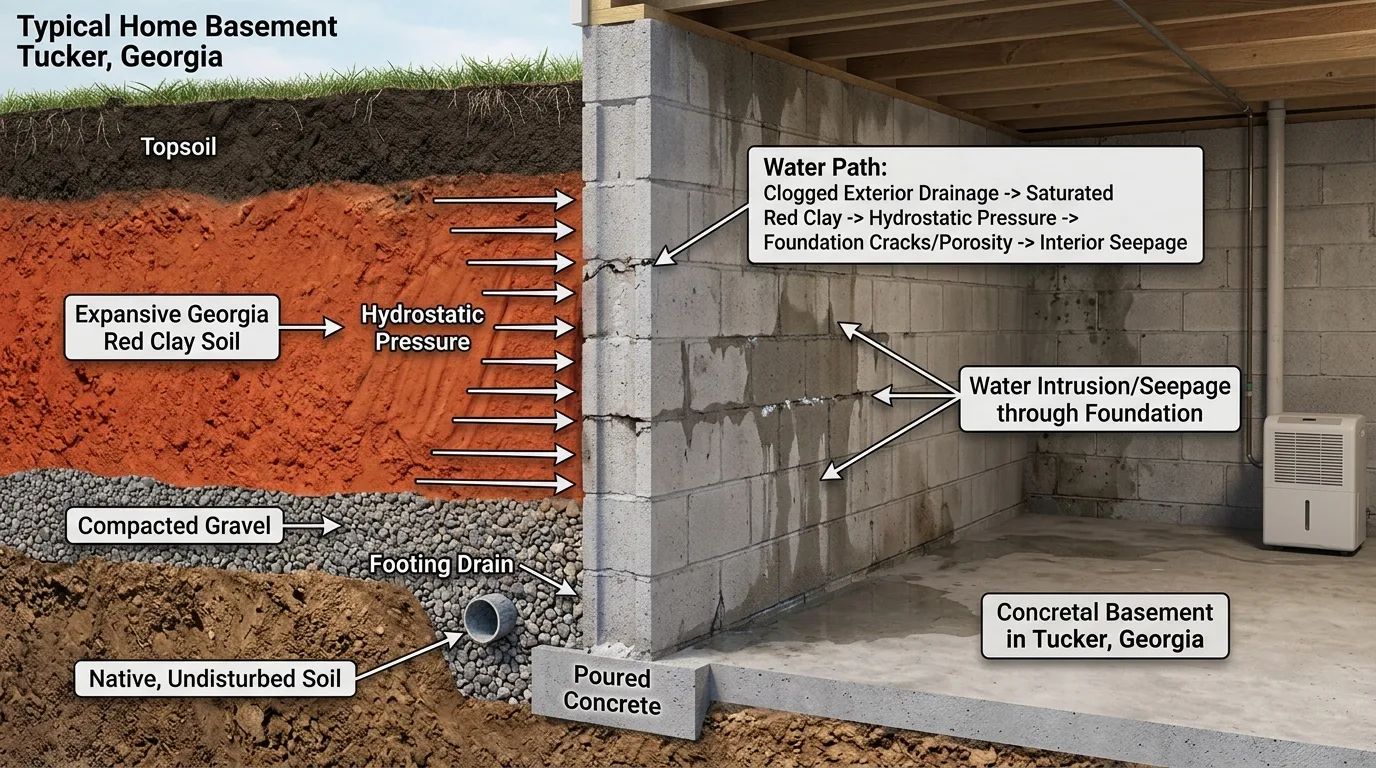
Ask a Marietta homeowner to describe their crawl space and many will say “I try not to think about it.” That avoidance is understandable — crawl spaces are dark, cramped, and uncomfortable to inspect — but for homes built on Georgia’s red clay soil throughout Cobb County, the crawl space is the most consequential moisture zone in the entire structure. Chronic crawl space moisture in Marietta is not bad luck; it’s a predictable outcome of a specific combination of soil type, climate, and construction. Understanding that combination is the first step toward permanently fixing it. In this post, we explain exactly why Marietta crawl spaces stay wet, what that moisture does to your home over time, and what the effective solutions are.
In this post, we cover the soil and climate factors that drive Marietta crawl space moisture, the damage timeline if moisture goes unaddressed, the available treatment options from basic to comprehensive, and what the restoration process involves.
Crawl Space Moisture Problems in Your Marietta Home?
We understand the red clay soil dynamics that drive crawl space water damage in Cobb County. Call (877) 698-1311 for a free assessment.
Why Red Clay Soil Keeps Crawl Spaces Wet in Marietta
The soil beneath virtually every home in Cobb County is Georgia red clay — a low-permeability, high-shrink-swell Ultisol characteristic of the Piedmont region. Two properties of red clay create chronic crawl space moisture regardless of what happens above the surface.
First, red clay’s low permeability means it holds water instead of allowing it to drain downward. When Marietta receives 53 inches of rain annually — more than 40% above the national average — much of that rainfall enters the soil surface and then can’t go anywhere quickly. The top several feet of soil stay saturated for days or weeks after each significant rain event. The crawl space floor sits directly on that saturated soil, with only a polyethylene vapor barrier (if present) between wet soil and the structural framing of the home.
Second, soil moisture vapor — water that exists as vapor within the soil rather than liquid water — continuously rises through the soil surface. This process is called vapor drive, and it operates continuously as long as the soil contains moisture above ambient conditions. In Georgia’s humid summer climate, vapor drive from red clay soil can add significant moisture load to a crawl space even between rain events. A vapor barrier — even a properly installed, intact one — slows but does not fully stop vapor drive. Full encapsulation with wall sealing is required to substantially reduce the vapor contribution.
What Happens to Your Marietta Home When the Crawl Space Stays Wet
Crawl space moisture causes damage in three related pathways that typically operate simultaneously.
Wood deterioration. Floor joists, subfloor sheathing, and the bottom plates of interior walls all sit within or directly adjacent to the crawl space moisture zone. Wood framing that maintains moisture content above 19% for extended periods provides the conditions for wood rot fungi — which are distinct from mold but equally destructive. Wood rot is slow, often developing over years before becoming structurally significant, but by the time floor deflection or soft spots become noticeable above, substantial structural compromise may already exist. Homes in the Indian Hills and Chimney Springs neighborhoods that have never had crawl space moisture treatment frequently reveal significant joist deterioration during their first professional inspection.
Mold colonization. Crawl space mold grows on wood framing, on the paper face of unfaced insulation, and on the bottom face of subfloor sheathing. From May through September in Marietta — when outdoor humidity exceeds 80% — crawl space humidity in an unencapsulated space can stay above 70–80% continuously, providing the sustained conditions that mold requires. Crawl space mold spores migrate into the living area through floor assemblies, mechanical penetrations, and HVAC systems. A homeowner experiencing persistent musty odors in the home without obvious visible mold source should consider a crawl space inspection as the first diagnostic step.
Pest attraction. Wood-destroying insects — termites and carpenter ants — are attracted to wood with elevated moisture content. A moist, deteriorating crawl space is exactly the condition that creates pest vulnerability. Marietta’s temperate climate supports year-round termite activity, and the elevated moisture in clay-soil crawl spaces provides the ideal conditions for subterranean termite colonies that are fed by wood-destroying activity in the framing above.
Marietta Crawl Space With Moisture, Mold, or Wood Rot?
We perform complete assessment and treatment — extraction, drying, encapsulation. Call (877) 698-1311 for a free evaluation.
Crawl Space Treatment Options: From Basic to Comprehensive
Vapor barrier replacement/installation ($500–$1,500). A properly installed 6-mil or thicker polyethylene vapor barrier on the crawl space floor significantly reduces vapor drive from soil moisture. This is the minimum effective treatment for crawl spaces without standing water problems. Existing vapor barriers in older Marietta homes are often torn, incomplete, or inadequate weight — replacement with a heavier, more durable product is often the most cost-effective entry-level treatment.
Crawl space dehumidifier installation ($1,000–$2,500). A commercial-grade crawl space dehumidifier installed in the crawl space and draining to a floor drain or condensate pump runs continuously to maintain crawl space relative humidity below 60%. This is effective as a standalone treatment for crawl spaces with high vapor load but no standing water issues.
Full encapsulation with wall vapor barrier ($3,000–$8,000). Full encapsulation involves covering the crawl space floor and walls — including the foundation walls — with a heavy-duty vapor barrier system, sealing all penetrations, and installing a commercial dehumidifier. This is the most effective treatment for Marietta’s clay-soil moisture challenge and is the recommended solution for homes with a history of crawl space moisture problems or significant mold treatment.
Standing water extraction and structural drying: Crawl spaces with standing water require extraction and professional structural drying before any encapsulation work begins — installing a vapor barrier over wet wood framing or wet soil would seal moisture inside rather than outside. We always perform moisture assessment and drying before encapsulation.
What to Expect During Crawl Space Restoration
A professional crawl space assessment involves a technician physically entering the space to inspect all framing, check moisture readings throughout the space, document existing vapor barrier condition, and identify any standing water or drainage issues. If mold is present, samples may be collected for identification.
Based on the assessment, we recommend the appropriate treatment level. Restoration typically begins with extraction (if needed), transitions to structural drying with equipment configured for crawl space conditions (lower volume, longer duration than above-grade drying), and concludes with encapsulation or vapor barrier installation once moisture readings confirm the framing is at target levels.
The full process typically takes 5–10 days for moderate events. Significant wood deterioration that requires joist or subfloor repair extends the timeline.
Frequently Asked Questions
How much does crawl space water damage restoration cost in Marietta?
Restoration runs $1,500–$5,000 for extraction and drying. Encapsulation adds $3,000–$8,000. Structural repairs depend on extent. See our full crawl space service page for complete pricing information.
How do I know if my Marietta crawl space has moisture problems?
The most reliable indicator is musty odors in the living area — particularly near floor vents. Other signs include unexplained high indoor humidity, soft spots in flooring, or visible mold on first-floor interior baseboards. Professional assessment with moisture meters provides definitive data.
Does encapsulation eliminate the red clay soil problem permanently?
Full encapsulation dramatically reduces vapor drive from clay soil into the crawl space and, when combined with a commercial dehumidifier, maintains crawl space humidity at levels that prevent wood rot and mold. It doesn’t change the soil, but it effectively manages the moisture that soil produces. Annual dehumidifier maintenance and periodic vapor barrier inspection are recommended for long-term effectiveness.
Marietta Crawl Space Problems Driven by Red Clay Soil?
Call Marietta Water Damage Restoration at (877) 698-1311 for assessment and full encapsulation solutions — serving East Cobb, West Cobb, and all of Cobb County.
Related: