Marietta Basement Flooding: Causes & Solutions for GA Homeowners
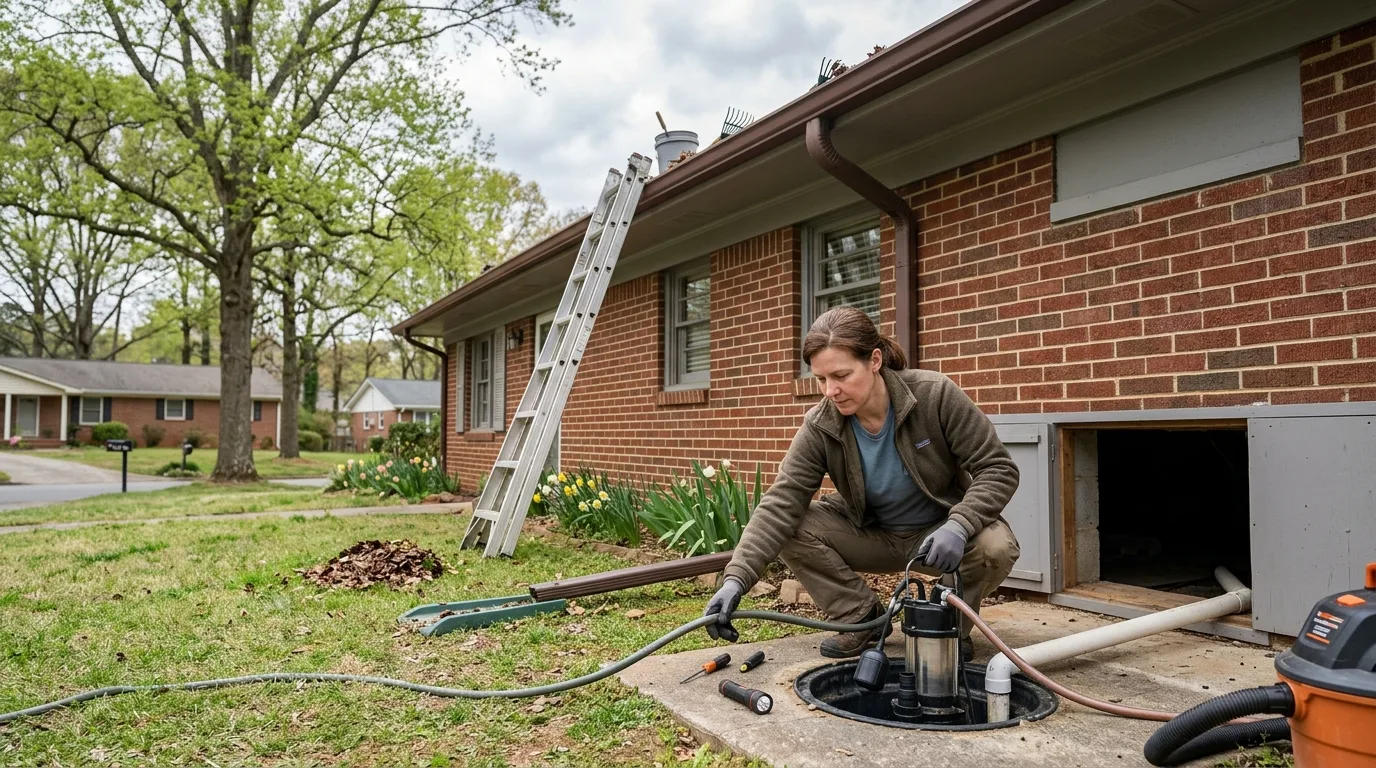
Every summer, Marietta homeowners throughout Cobb County open their basement doors after a thunderstorm to find water where there shouldn’t be any. Basement flooding in Marietta is common enough that many homeowners treat it as inevitable — but it isn’t. The causes are specific and predictable, the solutions are well-established, and understanding which cause is driving your flooding is the starting point for eliminating it. This guide covers the six main causes of basement flooding in Marietta and what to do about each.
In this post, we cover the six causes, why each is amplified by Marietta’s specific climate and soil conditions, the appropriate solution for each, and what to do immediately after flooding occurs.
Basement Flooding in Your Marietta Home?
Call (877) 698-1311 for immediate flood water extraction and structural drying — 24/7 across Marietta and Cobb County.
Why Marietta Basements Flood More Than Many Markets
Basement flooding in Marietta is disproportionately common for three interconnected reasons: Marietta averages 53 inches of rainfall annually (well above the US average of 38), Georgia red clay soil across Cobb County has very poor drainage permeability, and summer thunderstorms regularly deliver 2–4 inches per hour at peak intensity. Together, these factors create conditions where enormous quantities of water fall on ground that cannot absorb it and must go somewhere — and that somewhere is often the lowest point in the nearest structure.
This isn’t a design failure in Marietta’s housing stock. It’s a climate and soil reality that every Marietta homeowner needs to understand and actively manage. The six causes below are the specific mechanisms that turn rainfall into basement water.
Cause 1: Hydrostatic Pressure From Saturated Red Clay
As covered in our guide to red clay soil and water damage, Georgia’s red clay expands when wet and exerts increasing pressure against foundation walls as it saturates. When rainfall intensity exceeds the clay’s already-slow drainage capacity, water accumulates in the soil directly against the foundation. The hydrostatic pressure of that water column forces moisture through foundation wall pores, cracks, and the floor-wall joint — even in the absence of visible cracks.
Solution: Exterior drainage correction — maintaining positive grade away from the foundation, cleaning gutters, extending downspouts — removes the water accumulation before it becomes a pressure source. French drain systems installed around the foundation perimeter collect and redirect groundwater before it reaches the foundation wall. Interior perimeter drainage systems with a sump pump manage water that does reach the basement.
Cause 2: Surface Water Runoff
Low-permeability red clay means that during heavy rainfall, a significant portion of precipitation runs off the surface rather than soaking in. If your lot doesn’t have positive grade away from the foundation, or if neighboring lots or adjacent impervious surfaces (driveways, streets) direct runoff toward your home, that surface water finds the foundation wall and works its way in.
The I-75 and I-575 corridor neighborhoods in Marietta have relatively high impervious surface coverage — roads, parking areas, rooftops — that concentrates runoff during storm events. Homes near these corridors can receive runoff from areas far larger than their own lots.
Solution: Grade correction to achieve 6 inches of fall in the first 10 feet from the foundation. Window well covers to prevent below-grade window wells from filling. Extended downspout discharge to move roof runoff at least 6 feet from the foundation. Swales or berms to redirect neighbor runoff.
Cause 3: Window Well Flooding
Below-grade basement windows with insufficient window wells or missing window well covers are a direct path for surface water to enter the basement. When window wells fill with water — either from direct rainfall or from surface runoff — the window becomes a dam holding a column of water directly against the glass and frame. Most residential windows are not designed to hold back hydrostatic water pressure.
Solution: Window well covers prevent rainwater accumulation. Window wells should also drain through a gravel bed and a drain pipe connected to the footing drain or daylit to lower grade. Replacing basement windows with waterproof egress windows with positive drainage eliminates this vulnerability.
Basement Flooding From a Known Entry Point?
We identify and address every moisture pathway — not just what's visible. Call (877) 698-1311 for a free assessment across Marietta and Cobb County.
Cause 4: Failed or Absent Sump Pump
Sump pumps are the last line of defense when water does reach the basement — they collect water in a pit below the basement floor and pump it away from the foundation before it rises to flood level. A sump pump that has failed, that is undersized for the volume of water entering the space, or that loses power during a storm (when electrical outages most commonly occur) will not prevent flooding.
Marietta homes built before the 1980s often do not have sump pumps at all, as code requirements and builder standards have evolved. Homes built in the 1990s and 2000s may have original pumps that are now 20–30 years old and have reached the end of their reliable service life.
Solution: Test your sump pump annually by pouring water into the pit to verify activation. Install a battery backup sump pump that operates when power fails — this is particularly important given the correlation between severe storms and power outages in Marietta. Size the pump for the maximum possible inflow volume — consult a plumber if you’re unsure.
Cause 5: Sewer Backup and Floor Drains
During heavy rainfall, Cobb County’s municipal sewer system can approach capacity, creating backpressure that pushes water back through residential connections — floor drains, toilets, and shower drains in basement bathrooms. This is Category 3 (black water) contamination that requires professional cleanup regardless of the volume involved. Even small sewer backups contain pathogens that are dangerous to handle without proper protective equipment and remediation protocols.
Solution: A backflow prevention valve (also called a floor drain check valve) installed on the main drain line prevents municipal backpressure from entering the home. This is a licensed plumber installation. After any confirmed sewer backup, professional sewage cleanup services are required — not DIY cleanup.
Cause 6: Foundation Cracks From Soil Movement
Over years of seasonal clay soil expansion and contraction, the hydrostatic pressure cycles we described above gradually open micro-cracks in poured concrete or block foundation walls. Small cracks admit water during high-pressure saturation events and gradually widen as the freeze-thaw and wet-dry cycles continue. Foundation cracks in East Cobb and West Cobb homes are extremely common in structures more than 20 years old.
Solution: Foundation crack injection with hydraulic cement or polyurethane foam from the interior seals the crack against water intrusion. For larger structural cracks indicating wall movement, a structural engineer assessment is warranted before repair. The crack repair stops water intrusion; it does not address the soil pressure creating the crack, which requires exterior drainage work.
What to Do Immediately When Your Marietta Basement Floods
- Shut off electricity to the basement at the breaker before entering standing water.
- Identify the water source and stop it if possible — close the main water shutoff if plumbing is the source.
- Call for emergency water extraction immediately — don’t wait to see how much water there is.
- Document everything before anything is moved or removed — photos and video for your insurance claim.
- Remove what can be safely moved (furniture, boxes, valuables) to a dry area above grade.
Frequently Asked Questions
How much does basement flood cleanup cost in Marietta?
Mid-range basement flooding cleanup runs $2,113–$5,000. Finished basements, Category 3 contamination, or events where water sat for extended periods add significantly to this. See our Marietta water damage cost guide.
Is basement flooding in Marietta covered by homeowners insurance?
Surface flooding from outside (storm surge, overland flooding) requires separate flood insurance. Flooding caused by a burst pipe, sewer backup endorsement, or internal plumbing failure is typically covered by standard homeowners policies. Your specific policy controls — review coverage before a loss event.
How do I know which cause is flooding my Marietta basement?
A professional moisture assessment will identify the entry point. Common indicators: floor-wall joint wetness suggests hydrostatic pressure; localized wall dampness suggests a crack; floor drain backup suggests sewer issues; window-area wetness suggests window well flooding.
Marietta Basement Flooding? Call Now for Immediate Help.
Marietta Water Damage Restoration responds 24/7 across Marietta, Kennesaw, Smyrna, and all of Cobb County. Call (877) 698-1311.
Related: