Sewage Backup Cleanup in Marietta, GA: Health Risks & Solutions
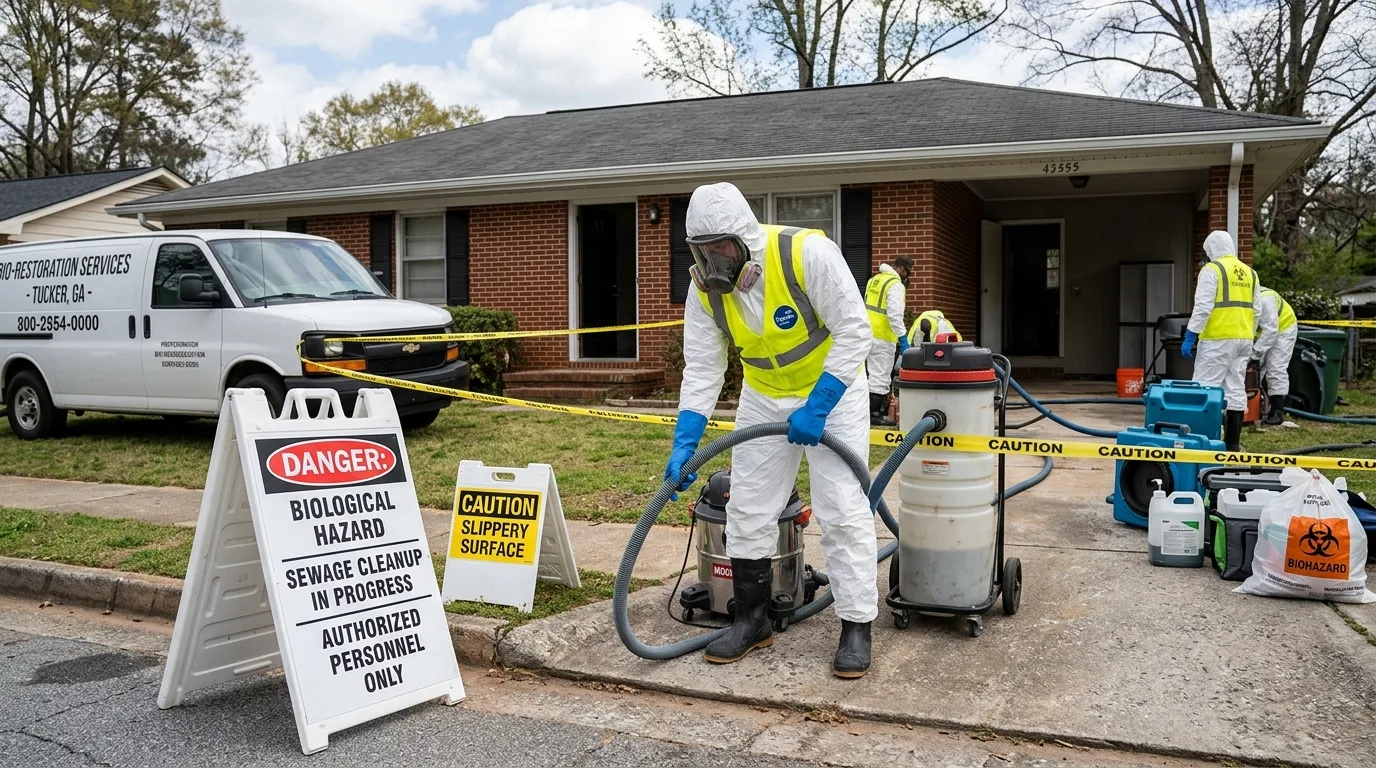
Sewage backup is one of the most distressing water events a Marietta homeowner can face — and one of the most dangerous if not handled correctly. The natural impulse is to clean it up yourself. But sewage is classified as Category 3 (black water) contamination under IICRC standards, meaning it contains pathogenic bacteria, viruses, and parasites that pose serious health risks without proper protective equipment and remediation protocols. In this post, we cover what makes sewage backup so hazardous, the specific health risks involved, why DIY cleanup is dangerous, and how professional sewage cleanup actually works in Marietta.
In this post, we cover health risks, the specific pathogens involved, why sewage backup is more common during Marietta’s storm season, and what proper remediation requires.
Sewage Backup in Your Marietta Home?
Don't enter the area unprotected. Call (877) 698-1311 for Category 3 biohazard cleanup across Marietta and Cobb County — available 24/7.
What Category 3 Water Means for Your Marietta Home
The IICRC classifies water damage into three categories based on contamination level. Category 1 is clean water from supply lines. Category 2 (gray water) includes water from appliances, sinks, and HVAC condensate with some contamination. Category 3 is black water — water that contains pathogenic agents, including raw sewage, floodwater that has contacted sewage systems, and toilet overflow involving feces.
Category 3 contamination means that every porous material that contacted the sewage water must be removed and disposed of — not dried and kept. This includes drywall, carpet, padding, insulation, and in cases of significant contamination, wood framing. Non-porous materials (concrete, metal, ceramic tile) can be treated with EPA-registered antimicrobial agents after thorough cleaning. The standard is elimination of contamination, not cosmetic treatment.
This disposal requirement is what makes sewage cleanup fundamentally different from clean-water restoration and why the cost is higher. There is no shortcut — leaving contaminated porous materials in place creates an ongoing health hazard that no amount of surface cleaning can resolve.
Health Risks From Sewage Backup in Marietta Homes
Bacterial pathogens. Sewage contains E. coli, Salmonella, Shigella, and Campylobacter, among other bacterial pathogens. Exposure through contact, inhalation of aerosols, or contamination of food preparation surfaces can cause gastrointestinal illness, urinary tract infections, and in immunocompromised individuals, more serious systemic infections.
Viral pathogens. Hepatitis A virus and norovirus are shed in human feces and can survive in sewage and contaminated surfaces for extended periods. Hepatitis A is transmitted through fecal-oral routes and causes acute liver disease.
Parasitic contamination. Giardia and Cryptosporidium are parasites shed in feces that can cause significant gastrointestinal illness and are difficult to eliminate with standard disinfectants.
Mold amplification. Organic material in sewage provides additional food sources for mold beyond what ordinary water damage provides. Marietta’s ambient humidity — which already supports mold growth within 24–48 hours of water events — combines with sewage organic matter to accelerate mold colonization in affected materials. Sewage backup events that are not properly remediated reliably produce significant mold problems within days in Cobb County’s summer climate.
Why Sewage Backup Happens More in Marietta During Storm Season
During heavy summer thunderstorms, when Marietta receives 2–4 inches of rain per hour at peak intensity, Cobb County’s municipal sewer system handles a significant increase in inflow — from storm drains, groundwater infiltration into aging sewer lines, and roof drain connections in some older construction. When inflow exceeds system capacity, backpressure develops in the sewer mains, which pushes water back up through the lowest connection to the residential plumbing — typically a floor drain, toilet, or shower in a basement or lower level.
This mechanism is why sewage backup in Marietta correlates so strongly with storm events rather than occurring randomly. Historic Marietta neighborhoods near Marietta Square, where infrastructure is older and sewer line deterioration from Georgia red clay soil movement is more advanced, experience backpressure events more frequently than newer-development areas. The solution — a backflow prevention valve on the main drain line — is a licensed plumber installation that prevents municipal backpressure from entering the home entirely.
Sewage Backup Near Marietta Square or East Cobb?
We know the drainage patterns that drive sewage events in Cobb County. Call (877) 698-1311 for immediate Category 3 cleanup.
Why DIY Sewage Cleanup Is Dangerous
The pathogen load in sewage makes DIY cleanup without proper personal protective equipment (PPE) genuinely dangerous. The minimum PPE for Category 3 work includes N95 or P100 respirators, impermeable gloves, eye protection, and full-body impermeable coveralls. The tools and procedures required to dispose of contaminated materials, treat non-porous surfaces with EPA-registered antimicrobial agents effective against the specific pathogens in sewage, and achieve post-treatment verification of pathogen elimination are not available to consumers.
Beyond personal safety, improper cleanup leaves residual contamination that creates ongoing health risks for household members — including children and elderly individuals who are most vulnerable to sewage pathogens. Georgia environmental regulations also govern the disposal of Category 3 waste material, and improper disposal creates regulatory exposure.
What Professional Sewage Cleanup Involves in Marietta
Professional sewage cleanup begins with full PPE deployment and containment establishment — negative pressure barriers that prevent contaminated air from spreading to unaffected areas. Sewage water is extracted using equipment dedicated to Category 3 work and disposed of in compliance with environmental regulations.
All porous materials that contacted the sewage are removed and bagged for disposal — this includes drywall, carpet, padding, and any insulation in the affected zone. Visible contamination is cleaned from all surfaces before antimicrobial treatment is applied. EPA-registered antimicrobials effective against sewage pathogens are applied to all treated surfaces with appropriate contact time to ensure efficacy. HEPA air filtration runs continuously during and after work to address airborne contamination.
After treatment, structural drying using industrial dehumidifiers and commercial air movers proceeds — sewage cleanup requires the same professional drying phase as any water damage event, with the additional verification that no residual contamination remains. The complete process is documented for insurance claims assistance.
Frequently Asked Questions
How much does sewage cleanup cost in Marietta?
Residential sewage backup cleanup runs $2,500–$10,000 depending on volume and affected square footage. Finished basements with extensive material removal add cost. Most events are covered under sewage backup endorsements on homeowners policies — standard policies typically exclude sewage backup without the endorsement. See our full sewage cleanup service page for more detail.
Can I clean up sewage backup in my Marietta home myself?
Without proper PPE, disposal resources, and EPA-registered antimicrobials, DIY cleanup creates personal health risks and leaves residual contamination. For any event involving more than a small amount of backup, professional remediation is the appropriate response.
How do I prevent sewage backup in my Marietta home?
The most effective prevention is a backflow prevention valve on the main drain line — a licensed plumber installation that blocks municipal backpressure from entering the home. Annual sewer line camera inspection identifies root intrusion or pipe deterioration before a backup occurs.
Sewage Backup in Marietta? We Handle It Safely.
Call Marietta Water Damage Restoration at (877) 698-1311 for Category 3 biohazard cleanup — serving Marietta, Kennesaw, Smyrna, and all of Cobb County.
Related: