Emergency Water Extraction: What Marietta, GA Homeowners Should Know
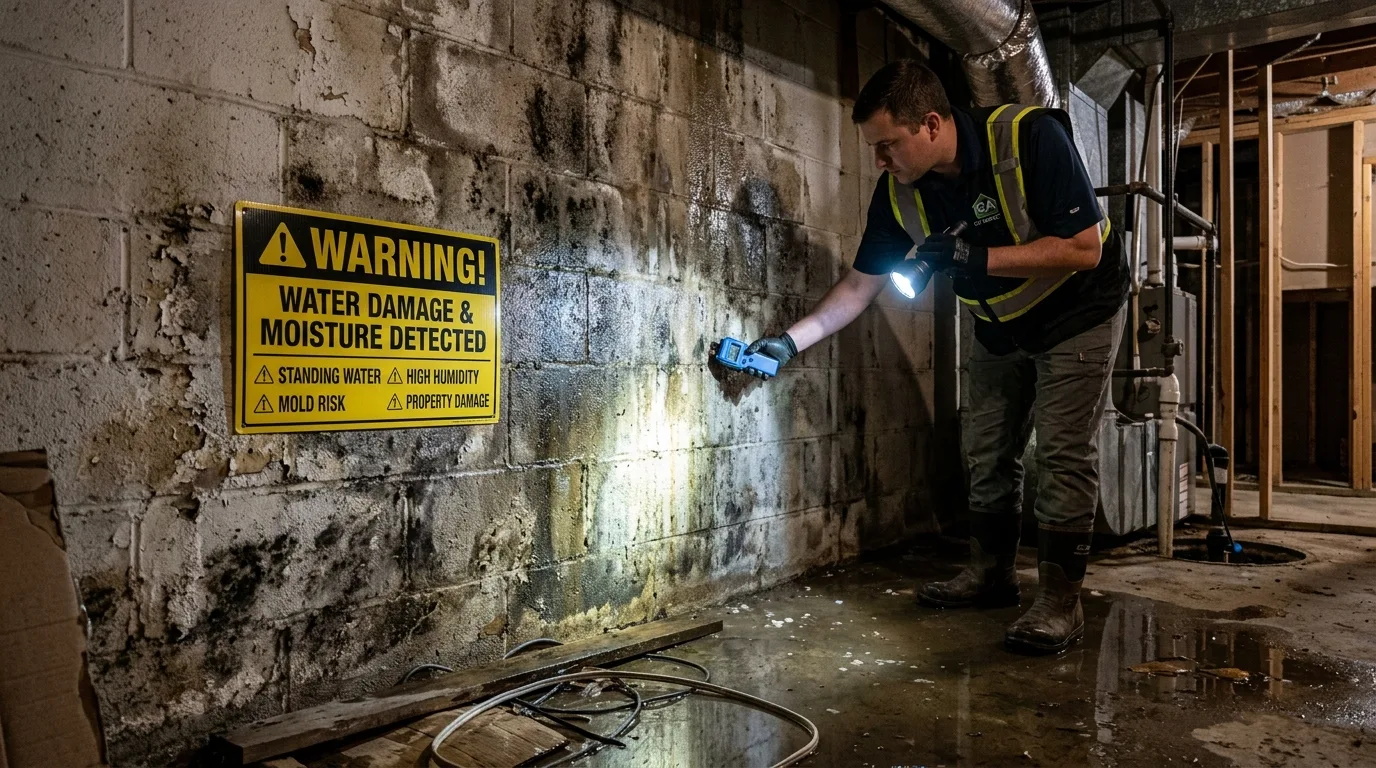
Standing water in your Marietta home means the clock is running. You’ve called for help, and professionals are en route — but you’re wondering what happens next, what equipment they’ll bring, and what you can do in the meantime that won’t make the situation worse. This guide walks Marietta homeowners through everything you need to know about the emergency water extraction process: what it involves, what the equipment does, how long it takes, and exactly what you should — and shouldn’t — do before the crew arrives.
In this post, we cover the step-by-step extraction process, the equipment involved, what you can do before help arrives, and what determines how long extraction takes in a Marietta home.
Emergency Water Extraction in Marietta — Call Now
24/7 emergency response across Marietta and Cobb County. Call (877) 698-1311 for immediate dispatch.
Why Emergency Water Extraction Is a Specialized Service
Most homeowners’ first instinct when water appears is to grab towels, a mop, or a shop vac. These are reasonable first-aid measures, but they don’t constitute emergency water extraction — they address surface water without addressing the moisture that has already migrated into structural assemblies. Marietta’s humid subtropical climate means the 24–48 hour mold colonization window is real and relevant: water in wall cavities, beneath flooring, and in insulation provides the sustained moisture that mold requires, and that moisture is invisible from the surface.
Professional water extraction uses a combination of submersible pumps for high-volume standing water, truck-mounted extraction units for residual moisture in flooring and lower wall assemblies, and portable extractors for targeted access to confined spaces. This equipment removes water at rates consumer equipment cannot match — and removes it from locations consumer equipment cannot reach.
What You Should Do Before Help Arrives
Safety first: confirm electricity is off in affected areas. Do not enter standing water until you have shut off the circuit breakers for any circuits that serve the flooded area. If the main electrical panel is in a wet area, call the utility company or a licensed electrician to de-energize the service before anyone enters.
Shut off the water source. If the water source is a plumbing failure — burst pipe, appliance line failure — close the main water shutoff to stop additional water flow. For storm flooding or sewer backup, the source is external and cannot be turned off, but you can limit interior damage by blocking drain pathways if safe to do so.
Move what can be safely moved to dry areas above grade. Furniture, rugs, books, electronics, and personal items that can be carried or slid should be moved to a dry area. Place aluminum foil under furniture legs that cannot be moved — this slows wicking and reduces staining.
Do not use household fans as a primary drying method. In Marietta’s summer humidity, household fans push humid air around without reducing the moisture content of building materials. They can actually spread mold spores from wet areas to dry areas if mold has already begun colonizing. Wait for professional air movers configured to work with industrial dehumidifiers.
Document everything before moving anything. Photograph and video all damage — standing water level, affected materials, visible watermarks — before anything is cleaned, moved, or removed. This is your insurance documentation.
Help Is on the Way — Here's What's Coming
Our crew arrives in Marietta within 60 minutes with full extraction equipment. Call (877) 698-1311.
What Happens During Emergency Water Extraction
Step 1: Moisture assessment and mapping. Before any water is extracted, technicians use thermal imaging cameras and moisture meters to map where water has migrated beyond the visible flooded area. Water moves through building materials by capillary action — it appears in walls and subfloors well beyond the standing water boundary. This mapping guides equipment placement and determines which materials can be dried in place versus which require removal.
Step 2: Standing water extraction. Submersible pumps handle high-volume standing water — basements with several inches of water, for example. These pumps can move hundreds of gallons per hour, dramatically reducing water volume before transitioning to specialized extraction equipment.
Step 3: Residual water extraction. Truck-mounted extraction units and portable extractors remove water from carpet and padding, flooring assemblies, and the lower sections of wall cavities. This phase is where professional equipment differs most dramatically from consumer equipment — the extraction pressure and flow rates required to pull moisture from building materials require industrial-grade units.
Step 4: Structural drying equipment placement. After extraction is complete, commercial air movers and LGR dehumidifiers are placed to begin structural drying. The number and placement of units is based on the moisture map developed in Step 1. This equipment typically runs for 3–7 days, with daily moisture readings determining when materials have reached target levels.
Step 5: Documentation. Every phase of the process is documented with moisture readings, equipment serial numbers, and daily logs. This documentation is required for IICRC compliance and is essential for insurance claims assistance.
Types of Water Damage Extraction Equipment and What Each Does
Truck-mounted extraction units: Provide the highest extraction capacity and suction depth. The unit stays in the truck and connects to the work area via hoses. Essential for large-area events and carpet/flooring extraction.
Portable extraction units: More versatile for accessing confined areas — crawl spaces, closets, stairways. Lower capacity than truck-mounted units but able to reach locations the truck hose cannot.
Submersible pumps: Designed for high-volume standing water — anything over a few inches in an open area. Used first to bring water volume down to a level that extraction units can handle.
LGR Dehumidifiers: Low-Grain Refrigerant dehumidifiers remove up to 50 gallons of water per day from the air and building materials. These are the workhorses of the structural drying phase that follows extraction.
Commercial air movers: High-velocity floor dryers that accelerate evaporation from building material surfaces. Work in tandem with dehumidifiers — air movers produce the vapor that dehumidifiers remove.
How Long Does Emergency Water Extraction Take in Marietta?
The extraction phase — removing standing and liquid water — typically takes 1–4 hours depending on water volume and affected square footage. A basement with several inches of standing water may take 3–4 hours. A single-room overflow event may take 60–90 minutes. The structural drying phase that follows takes 3–7 days with daily monitoring.
Factors that extend extraction time in Marietta include: high volume from summer storm events, water that has been standing for more than a few hours before the crew arrives (as it migrates into more materials), and homes with complex floor assemblies (tile over plywood over concrete) that require multiple extraction approaches for each layer.
Frequently Asked Questions
What should I not do while waiting for emergency water extraction in Marietta?
Don’t use household fans or box fans as a drying strategy. Don’t attempt to use a shop vac as a primary extraction tool for more than a small puddle. Don’t enter the area if electricity is uncertain. Don’t move wet materials to areas without ventilation — this can spread mold spores.
How much does emergency water extraction cost in Marietta?
Extraction is typically included in the overall restoration cost of $2,113–$5,000 for mid-range jobs. As a standalone service for small acute events, expect $500–$1,500. See our full water damage cost guide for Marietta.
Will my insurance cover emergency water extraction in Marietta?
If the underlying event is a covered loss (burst pipe, appliance failure), extraction is part of the covered mitigation. Document the event and call professionals promptly — delayed mitigation can affect claim settlement. See our insurance coverage guide for Georgia homeowners.
Water Emergency in Your Marietta Home?
Call Marietta Water Damage Restoration at (877) 698-1311 — 24/7 emergency water extraction across Marietta, Kennesaw, Smyrna, and all of Cobb County.
Related: